DARPA sets October 23 abstract deadline for quantum-computing evaluators
QBI evaluators must submit abstracts by October 23, 2026. Invited full proposals follow by December 30 under an amendment adding a cybersecurity requirement.
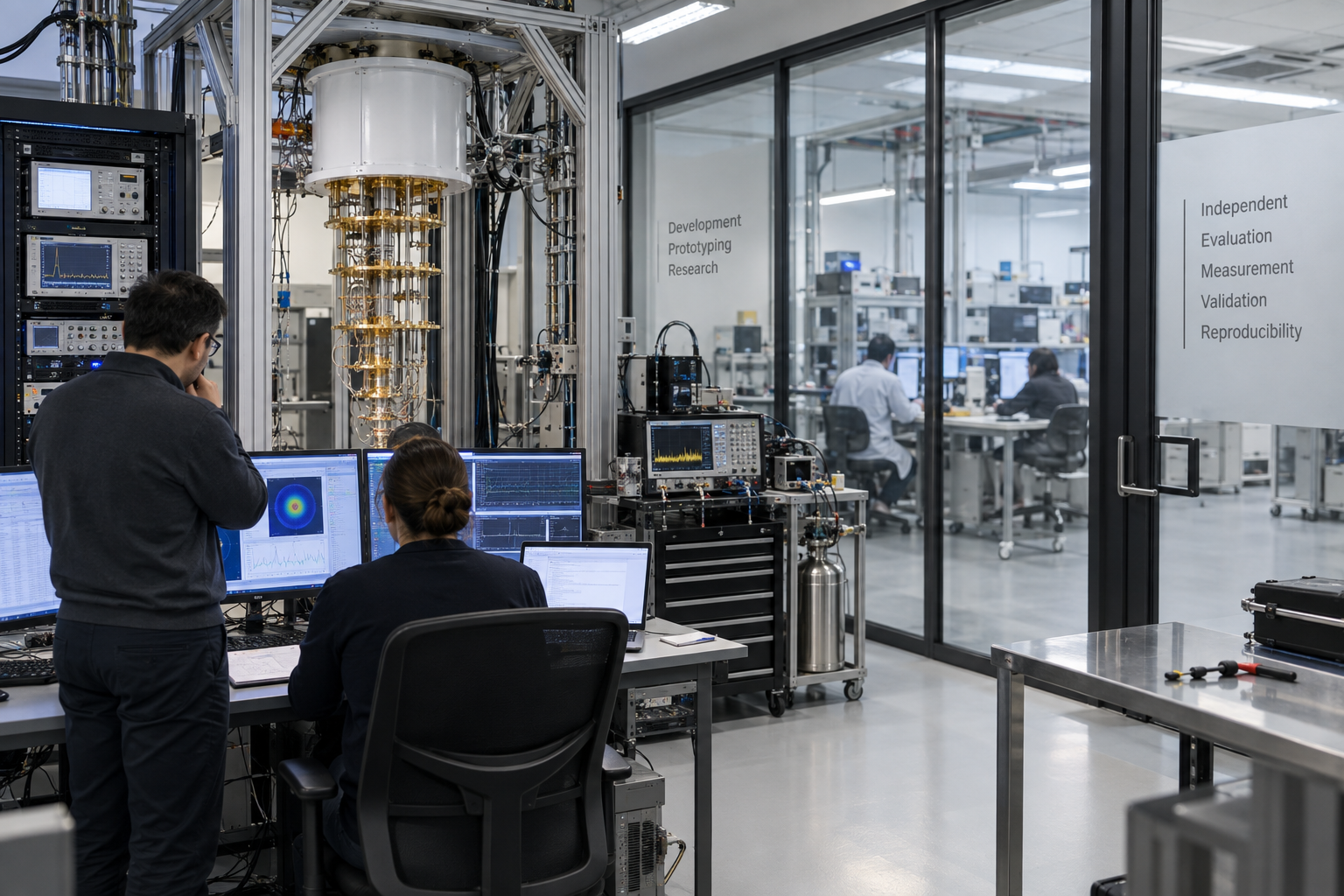
DARPA is seeking independent quantum-computing evaluators, with required abstracts due October 23, 2026, at 4 p.m. Eastern Daylight Time (UTC−04:00). Only invited organizations may then submit full proposals, due December 30 at 4 p.m. Eastern Standard Time (UTC−05:00).
Those are separate stages in Amendment 01 to DARPA-PA-26-02-01, posted August 28. The amendment extends the submission dates and adds a Cybersecurity Maturity Model Certification (CMMC) Level 1 self-assessment requirement. The agency's summary page displays December 30, but that is the full-proposal deadline; prospective participants need to act before the earlier abstract cutoff.
What DARPA wants evaluated
The opportunity supports independent verification and validation (IV&V) for the Quantum Benchmarking Initiative (QBI). QBI asks whether a quantum computer can deliver computational value greater than its cost by 2033. Its program framework progresses from concept plausibility through research-and-development planning to verification that a system can be built and operated as intended.
The amended solicitation seeks facilities, equipment, tools, and expertise to supplement the government's existing evaluation team. Section C spans use-case definition, systems engineering, integrated prototype testing, component requirements, and device testing. It specifically identifies expertise in high-performance computing, applications, quantum information science, and hardware validation.
That breadth matters for acquisition readers. A component measurement can support one part of a design without establishing the value or feasibility of the complete computer. The notice itself identifies unresolved comparisons with the best classical alternatives as a reason independent evaluation is needed.
Abstract first, proposal by invitation
Sections D and E establish a required abstract phase with rolling submissions. Abstracts are assessed for the value they add to existing QBI evaluation efforts. Selected respondents receive an invitation and a separate full-proposal package; an invitation does not guarantee an award.
Attachment A supplies the mandatory abstract template. It asks for technical expertise, facilities and equipment, personnel, and an estimated budget and schedule. For abstract preparation, Section C directs applicants to assume a 12-month period of performance. That is a planning assumption for proposed work, not evidence of an awarded delivery period.
Full proposals are evaluated, in descending order of importance, on technical feasibility and execution, scientific validation and evidence, and budget and price. The scientific criterion calls for reproducible results, defensible findings, and independent assessment. Successfully negotiated selections would receive Other Transactions for Research.
Independence includes information controls
Amendment 01 adds CMMC Level 1 (Self). Section H specifies a valid Final Level 1 status and current annual affirmation recorded in the government's assessment system as conditions for award eligibility. It separately retains requirements for handling controlled unclassified information; the Level 1 addition does not replace those obligations.
The same section allows DARPA to require a conflict-of-interest mitigation plan and warns that IV&V work may affect eligibility for future DARPA research. Access to proprietary information remains subject to award terms and nondisclosure agreements.
The notice also anticipates restrictions requiring DARPA permission before publishing results. Public reporting may therefore reveal less than the evaluators can inspect. Limited public detail should be recorded as an evidence gap, rather than treated as proof that testing or an award did not occur.
What would demonstrate progress
The amendment establishes requested work and submission procedures. It does not identify an award recipient, committed funding amount, accepted facility, or completed evaluation.
The procurement developments to follow are invitations, negotiated awards, later amendments, and descriptions of funded scope. Because submissions are rolling, the final deadline alone does not establish when selections will occur.
For technical progress, readers should look for evidence connecting prototype measurements to full-system assumptions about workload, error correction, infrastructure, cost, and the classical alternative. The solicitation sets expectations for rigorous evaluation; subsequent findings will show which claims withstand it.
Sources & evidence
Source material checked Sep 14, 2026. Reporting and analysis distinguish documented facts from company claims.
- QBI Topic: Independent Verification and Validation ↗DARPA
- Quantum Benchmarking Initiative ↗DARPA
- QBIT Stage A frequently asked questions ↗DARPA
- SAM.gov opportunity DARPA-PA-26-02-01 ↗U.S. General Services Administration
- DARPA-PA-26-02-01 Amendment 01, August 28, 2026, and Attachment A abstract instructions ↗DARPA via SAM.gov
AI-assisted research and drafting. Approved for publication by Mara Voss on Sep 14, 2026.
Continue reading

DARPA's optical-clock pilot makes manufacturing the next milestone
The It's About Time announcement targets a production pathway, while its facility and unit-delivery dates remain future milestones.
DARPA's QBI Stage B puts quantum-computing plans under closer examination
The November 2025 selection advances a staged evaluation of utility-scale computing, with verification still ahead.
Quantum defense programs face a manufacturing test after the prototype
Recent DARPA programs show why acquisition decisions need evidence about repeatable production, independent evaluation and sustainment.